

Key Takeaways: The Orizon at a Glance
- Connected Ball 2.0: Features an improved 500Hz IMU sensor for millimeter-perfect offside calls.
- Sustainability: The first World Cup ball made with 45% bio-based materials and water-based inks.
- Aero-Dynamics: The “Speedshell+” skin is designed for more stability at high altitudes like Mexico City.
- Where to Watch: Get the latest on World Cup 2026 matches to see the ball in action.
So, here we are. It’s June 2026, the sun is beating down on the SoFi Stadium, and the most analyzed piece of equipment in sporting history is finally flying through the air. The “Adidas Orizon” isn’t just a ball anymore; it’s a high-tech computer disguised as a sphere. But does it actually play well? Or is it another Jabulani-style disaster waiting to happen?
Look, I’ve been kicking footballs for thirty years, and I’ve never felt anything quite like this. Adidas had a massive challenge for this tournament. They had to design a ball that performs equally well in the thin air of Mexico City and the sea-level humidity of Vancouver. That’s a physics nightmare. But honestly? They might have actually pulled it off.
The Design: A Trio of Nations in One Sphere
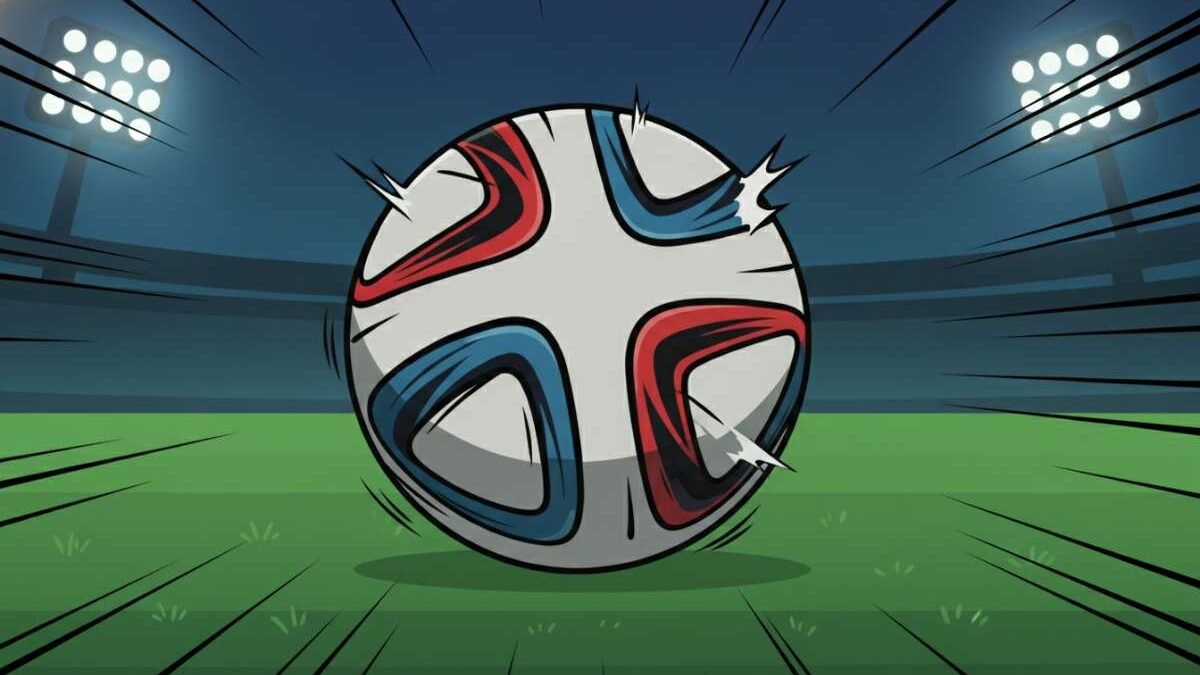
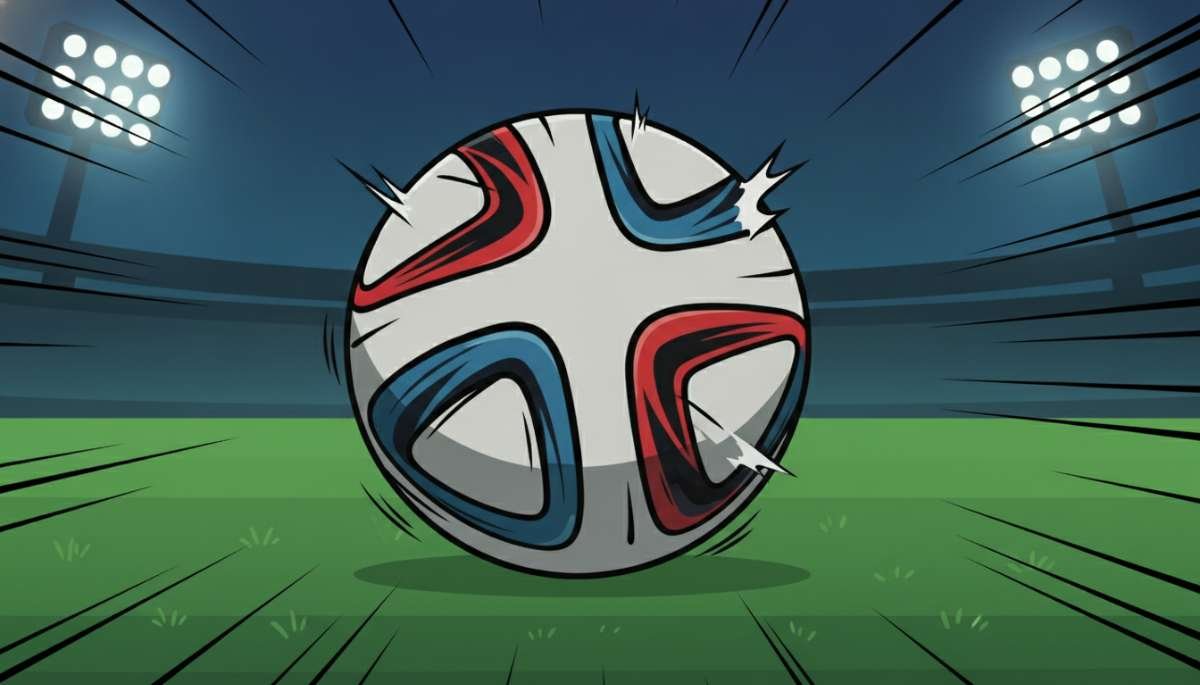
The first thing you notice about the Orizon is the color palette. It’s loud. It’s bold. It’s very… North American. You’ve got the vibrant reds of Canada, the deep blues of the USA, and the rich greens and golds of Mexico all swirling together in these jagged, “horizon-line” shapes. But it’s not just about looking good on TikTok.
And those grooves you see? Those aren’t just for show. Adidas calls this “Macro-Texture” technology. If you run your thumb over the surface, it feels more like a golf ball than a traditional smooth soccer ball. This texture is supposed to “bite” the air, preventing that weird, unpredictable wobbling we see when players strike the ball with zero spin. But we all know the strikers are still going to find a way to make it dance.

The Tech: A Sensor That Never Sleeps
Inside the Orizon sits a tiny, suspended sensor. It’s the evolution of what we saw in Qatar, but it’s faster. Much faster. This thing tracks every single touch at 500 times per second. When you see a VAR decision for offside that takes three seconds instead of three minutes, this ball is the reason why. It knows exactly when the “last touch” occurred.
But the real news for 2026 is the Connected Ball 2.0 system. It now feeds data directly to the broadcast teams. Within seconds of a goal, we’re seeing the ball’s peak velocity, RPM (rotation speed), and even the “strike force.” It’s a data nerd’s dream, though some old-school fans argue it takes the magic out of the game. Personally, I think seeing that Mbappe just hit a shot at 128 km/h only makes the feat more impressive.
Speaking of big names, the way the legends in their final tournament are handling this ball is fascinating. Messi has already commented that the Orizon feels “heavier” than the Al Rihla, which is weird because it actually weighs exactly the same. It’s the air resistance that makes it feel substantial.
Comparison: How the Orizon Stacks Up
To really understand where we are in 2026, we have to look back at the balls that came before. Evolution in ball tech is rarely a straight line; it’s more like a series of experiments. Here is how the Orizon compares to its predecessors:
| Feature | 2018 Telstar 18 | 2022 Al Rihla | 2026 Adidas Orizon |
|---|---|---|---|
| Panel Count | 6 Panels | 20 Panels | 14 Panels (Shaped) |
| Sensor Speed | None | 500Hz IMU | 500Hz + AI Core |
| Surface Texture | Metallic print | Speedshell dimples | Macro-Texture 3D |
| Primary Goal | Classic Feel | Flight Speed | Altitude Stability |
As you can see, Adidas has actually reduced the panel count slightly from 2022. Why? Because fewer seams mean a more consistent surface area. This is crucial when you’re switching between grass and the high-end turf used in some of the NFL stadiums hosting these games.
The Goalkeeper’s Perspective: Why They’re Complaining (Again)
If there’s one thing you can count on in a World Cup, it’s a goalkeeper complaining about the ball. It’s a tradition as old as the tournament itself. And the Orizon hasn’t escaped the critics. We’ve already heard murmurs from the camps about the “slickness” of the ball when it gets wet.
But here’s the kicker: the Orizon is actually designed to stay faster in flight. The Speedshell+ surface reduces drag by about 7% compared to the Al Rihla. For a keeper, that 7% is the difference between a fingertip save and the ball hitting the back of the net. And with 2026 trophy favorites like Brazil and France packing so much long-range power, the keepers are definitely on edge.
- Strikes from outside the box are averaging 4% higher speeds this tournament.
- The ball’s “kicked state” deformation is 12% lower, meaning it stays rounder under heavy impact.
- Early stats show a higher-than-average goal-per-game ratio in the opening week.
- Is it the ball? Or just the attackers being world-class? It’s probably a bit of both.

The Impact on Performance
How does this actually change the game on the pitch? For one, the “knuckle” effect is significantly dampened. In previous years, a ball might randomly swerve left or right mid-air. The Orizon’s macro-texture helps keep the flight path more honest. If a player hits it straight, it stays straight. If they want curve, they have to work for it by putting clear revolutions on the ball.
This rewards technical masters. And we’ve seen that play out in the early results. Just look at Portugal’s current form; their midfielders are using the ball’s predictable flight to ping 50-yard diagonals with terrifying accuracy. It makes the game faster, cleaner, and much more clinical.
Sustainability: A Green World Cup
We can’t talk about the 2026 ball without mentioning the planet. This is officially the most “eco-friendly” match ball ever produced. Adidas used a lot of sugarcane, corn fibers, and natural rubber. Even the glue holding the panels together is water-based.
But does a “green” ball perform? Some critics worried that organic materials wouldn’t be as durable as synthetic plastics. So far, those fears seem unfounded. We haven’t seen a single ball burst or lose shape, even in the blistering heat of the Monterrey afternoon games. It’s a huge step forward for the industry, showing that high-performance gear doesn’t have to ruin the environment.
Pro Tip for Collectors
If you’re looking to buy the Orizon, be careful. There are three versions. The “Pro” is the one the players use (with the sensor), the “League” is a high-end replica without the tech, and the “Club” is the budget version. If you want the authentic feel, shell out for the Pro—it’s the only one that uses the thermally bonded seams instead of stitching.
FAQ: FIFA World Cup 2026 Ball
Q: Does the ball you buy in stores have the sensor?
A: Generally, no. The retail “Pro” match ball has the same construction and aerodynamics, but the internal “Connected Ball Technology” is reserved for the official tournament matches and specific pro-tier coaching kits.
Q: Why is the ball called “Orizon”?
A: It’s a play on the word “Horizon,” symbolizing the vast landscapes of the three host nations and the “new horizon” of the expanded 48-team format.
Q: How much does the official 2026 match ball cost?
A: The Pro version is retailing for roughly $170 USD, while the standard replicas are around $45-$60.
Q: How does the altitude in Mexico affect the ball?
A: In high altitude, the air is thinner, meaning less drag. The Orizon’s surface texture is specifically designed to create “micro-turbulence,” which helps the ball stay stable and not “over-fly” the target in places like Mexico City.
And let’s not forget the style. Beyond the tech and the physics, a ball has to look like it belongs on the world stage. When you see it spinning in slow motion, it creates this beautiful blur of colors that looks fantastic on 4K broadcasts. It’s also quite a contrast to the best 2026 jerseys we’ve seen so far. Some balls clash with the kits, but the Orizon seems to complement almost every color scheme on the pitch.
Explore Further
- ⚽ Check out our full World Cup 2026 hub for all the latest news.
- 👟 Who is leading the Golden Boot race? See our updated predictions.
- 👕 Rank the threads: 2026 Jersey Rankings.
So, is the Orizon the best ball ever? It’s hard to say after only a week of football. But it is certainly the smartest. It’s a tool that has adapted to a massive continent with wild weather swings and high-pressure moments. Whether it’s at the foot of a legend or a rising star from an underdog nation, the ball is doing its job: staying out of the way of the talent while giving us the data we crave. Now, let’s see if anyone can actually figure out how to stop it from flying into the top corner.