

Top 10 Premier League Football Clubs on Facebook in 2026 (Updated)
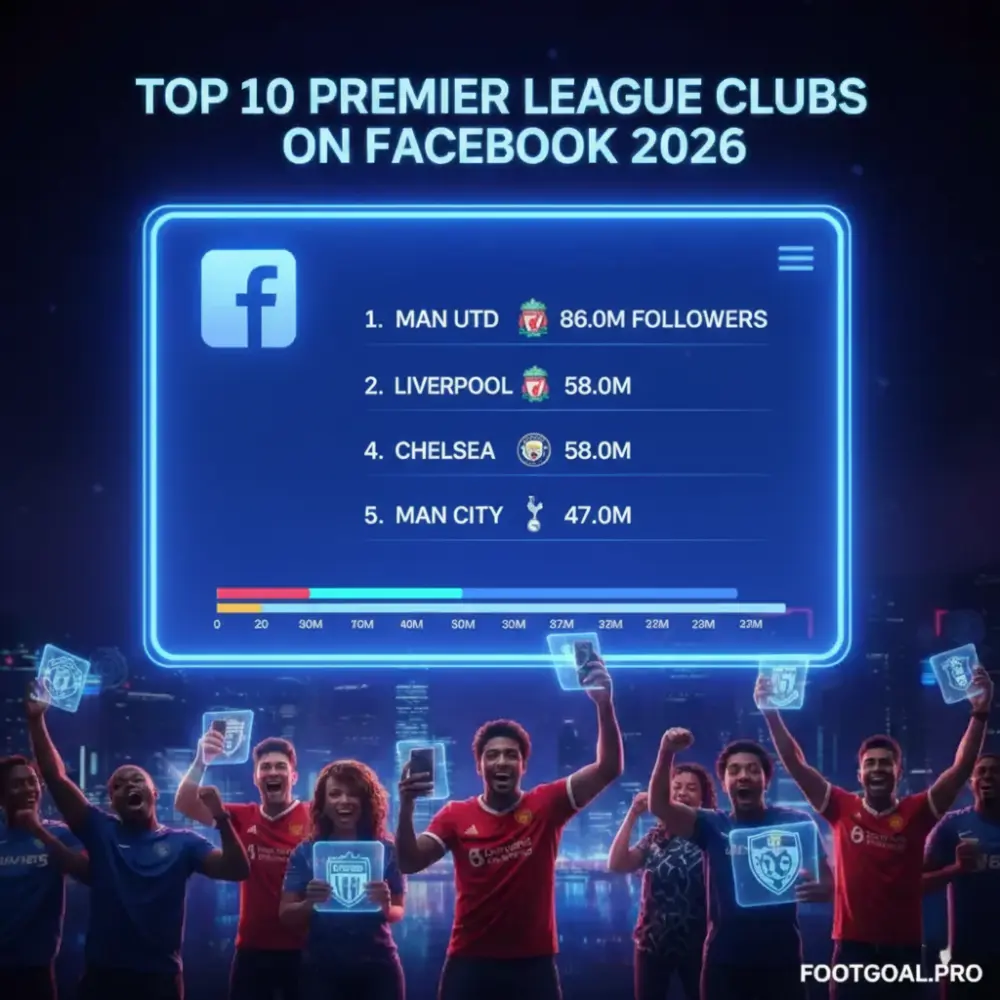
Manchester United is still the king of Facebook. While critics once claimed the platform was dying, the Red Devils just proved everyone wrong by surging to 86 million followers. It turns out that global reach doesn’t just evaporate because a new app shows up. United has doubled down on their international markets, and the numbers show it’s working.
But the real story isn’t just at the top. We’ve seen a massive reshuffle in the chasing pack. Liverpool and Chelsea are now neck-and-neck, while Manchester City has finally bridged the gap between being a “TikTok club” and a Facebook powerhouse. The landscape is shifting, and it’s getting crowded at the summit.
Key Takeaways: 2026 Social Snapshot
- The 80M Club: Only Manchester United occupies this tier, sitting comfortably at 86 million.
- The Dead Heat: Liverpool and Chelsea are tied for second place at 58 million followers each.
- City’s Surge: Man City is breathing down their necks with 57 million, showing their sustained success is finally converting into legacy followers.
- Stagnation at the Mid-Tier: Arsenal and Spurs remain stable but aren’t seeing the explosive growth found in the top four.
Which Premier League team has the most followers on Facebook?
The answer is Manchester United, and it isn’t even close. With 86 million followers, United holds a 28-million-lead over their nearest rivals.
That’s a massive buffer. They’ve successfully tapped into the “legacy” nature of Facebook, using it as a hub for their massive fanbases in Southeast Asia and Africa where Facebook Lite remains a primary way to consume football news.
Chelsea and Liverpool are fighting for the scraps in second place with 58 million each. Arsenal holds the fifth spot with 47 million, while Tottenham rounds out the “Big Six” at 37 million. After that? The numbers drop off a cliff.
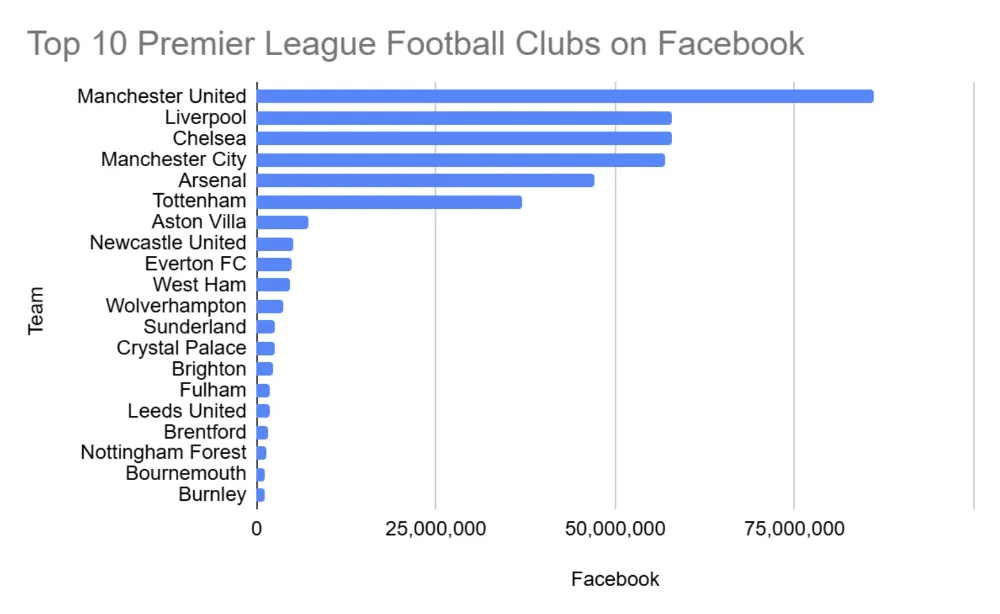
The 2026 Facebook Leaderboard
| Rank | Football Club | Facebook Followers |
|---|---|---|
| 1 | Manchester United | 86,000,000 |
| 2 | Liverpool | 58,000,000 |
| 3 | Chelsea | 58,000,000 |
| 4 | Manchester City | 57,000,000 |
| 5 | Arsenal | 47,000,000 |
| 6 | Tottenham | 37,000,000 |
| 7 | Aston Villa | 7,200,000 |
| 8 | Newcastle United | 5,100,000 |
| 9 | Everton FC | 4,900,000 |
| 10 | West Ham | 4,700,000 |
1. Manchester United – 86 Million
United’s growth is relentless. Despite a decade of “rebuilding,” the brand is bulletproof. They’ve moved past the 73.6 million mark we saw a few years ago and accelerated. Why? Because they’ve mastered the art of “localized content.” If you’re a fan in Thailand, your Facebook feed looks different than a fan’s in Manchester. It’s smart, it’s aggressive, and it’s why they’re still #1.
2. Liverpool – 58 Million
Liverpool has officially caught up. For a while, they were lagging behind Chelsea, but the global appeal of the “Liverpool way” has stuck. They’ve added nearly 20 million followers in the last few years. Success in Europe is the engine here; Facebook fans love trophies, and Liverpool’s trophy cabinet has been active.
3. Chelsea – 58 Million
Chelsea remains a powerhouse, particularly in markets like Africa and the US. Even with the chaos of ownership changes and squad overhauls, the Blue flag flies high on social media. They’re tied with Liverpool, making the race for the “best of the rest” absolutely frantic.
4. Manchester City – 57 Million
City is the big mover. They were at 40.8 million not long ago. Jumping to 57 million proves that winning isn’t just for the moment—it builds a permanent audience. They’ve stopped losing the “older” demographic on Facebook and are finally being viewed as one of the established giants rather than just the “new money” club.
5. Arsenal – 47 Million
The Gunners have held steady at 47 million. While they haven’t seen the explosive 2026 jump that City or Liverpool enjoyed, their engagement rates are some of the highest in the league. Arsenal fans are vocal. They don’t just follow; they comment, share, and argue. That’s value that raw numbers don’t always show.
The Best of the Rest: From Villa to Burnley
Once you step outside the elite, the numbers change drastically. But there’s still a lot to talk about here.
- Aston Villa (7.2M): Unai Emery’s European adventures have clearly paid off. They are the clear leaders of the “mid-tier” clubs.
- Newcastle United (5.1M): Surprisingly steady. Despite the massive investment, the Facebook explosion hasn’t quite hit the stratosphere yet. They are building slowly.
- Brighton (2.2M): They’ve managed to hold onto their gains. They are the model for “smart” clubs, turning tactical brilliance on the pitch into a respectable global following.
- Sunderland (2.6M): Still punching way above their weight despite their league position over the years. That’s a proper legacy fanbase.
The Full List (Remaining Clubs):
- Wolverhampton: 3.6 million
- Crystal Palace: 2.5 million
- Fulham: 1.8 million
- Leeds United: 1.7 million
- Brentford: 1.5 million
- Nottingham Forest: 1.4 million
- Bournemouth: 1.2 million
- Burnley: 1.1 million
Why These Numbers Actually Matter
But here’s the thing: social media isn’t just a vanity project. These numbers represent the “top of the funnel” for revenue. When United negotiates a shirt sponsorship, they aren’t just selling the 11 players on the pitch; they are selling access to 86 million people.
Think of it this way: a 1% conversion rate on a shirt sale for Manchester United is 860,000 jerseys. For a club like Bournemouth, that same 1% is only 12,000. The scale of the “Big Six” creates a financial gap that is almost impossible to close through ticket sales alone. It’s the digital economy, and the giants are winning.
Global Context: The Spanish Shadow
We have to be honest—the Premier League is huge, but Spain still owns the ceiling. Real Madrid and Barcelona are both hovering well north of 125 million followers. United is the only English club that can even see them in the distance. The “El Clasico” brands are essentially their own religions at this point.
Frequently Asked Questions
Who is the most popular English club on Facebook?
Manchester United. They have 86 million followers as of early 2026.
Has Facebook growth slowed down for football clubs?
Actually, no. While TikTok is for highlights, Facebook has become the “newspaper” for fans in emerging markets. We’ve seen significant growth for clubs like Man City and Liverpool this year.
Why are smaller clubs like Brighton and Brentford growing?
It’s the “underdog” effect. Global fans love a well-run club that beats the giants. Every time Brighton wins a big game, their follow count spikes in international markets.
The Final Word
Manchester United remains the king of the hill with 86 million followers, but the gap is closing—not at the top, but in the race for second. Liverpool and Chelsea are locked in a 58-million-follower stalemate, with City right behind them. While the “Big Six” dominate the headlines, the growth of clubs like Aston Villa suggests that the hierarchy isn’t completely set in stone. Facebook might be the “older” platform, but in 2026, it remains the ultimate scoreboard for global popularity.