How Much Tax Premier League Players Actually Pay: The 45% Rate, Image Rights & Net vs. Gross Explained

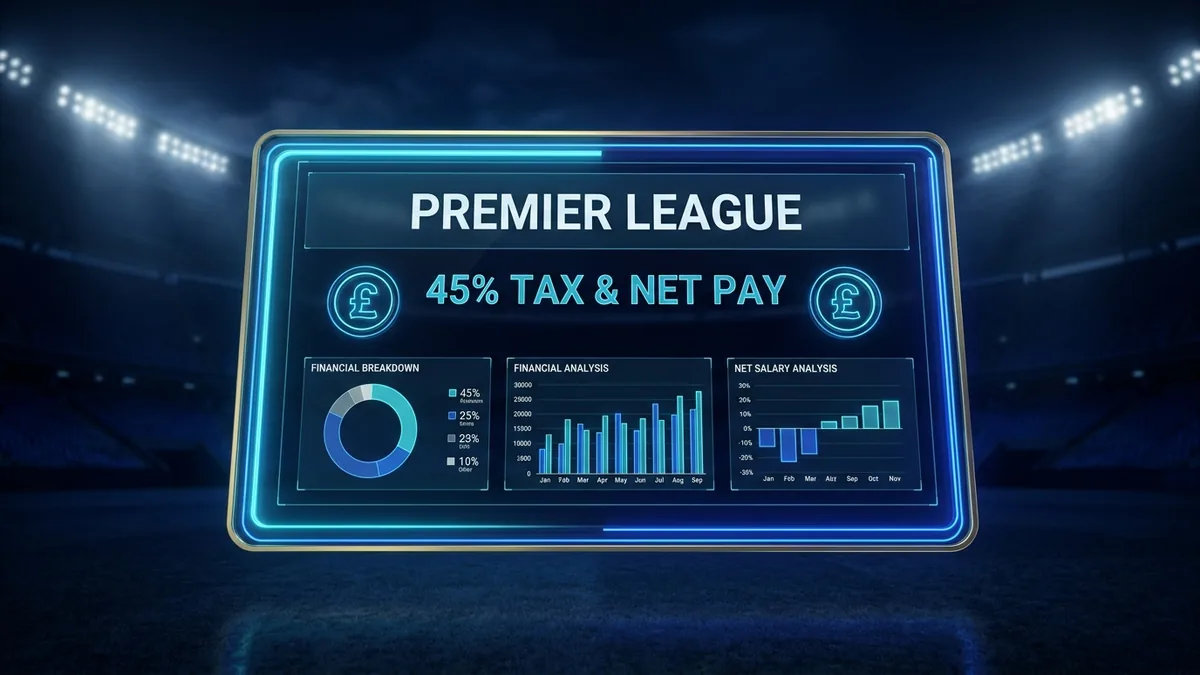
Short answer: Premier League footballers pay the UK’s 45% additional income tax rate on all earnings above £125,140, plus 2% employee National Insurance. However, under HMRC guidelines, clubs can pay up to 20% of a player’s package into an Image Rights Company taxed at the 25% Corporation Tax rate. Clubs also pay 13.8% employer National Insurance, meaning a £200,000-a-week gross contract costs the club over £227,600 weekly in total employment cash outflow.
You vs. Footballer: Live Wage & Earnings Calculator
Embed This Live Wage Calculator On Your Website
Select default star and currency to copy the shortcode or HTML block for WordPress posts.
| Period | C. Ronaldo | You |
|---|
When a Premier League club announces that a player has signed a contract worth £150,000, £250,000, or £400,000 per week, fans and media discussions almost exclusively cite the headline gross figure. In reality, elite football contracts in the United Kingdom are subject to some of the most rigorous taxation frameworks in professional sport, governed directly by HM Revenue & Customs (HMRC).
Understanding how much a Premier League footballer actually takes home requires dissecting the UK Pay-As-You-Earn (PAYE) income tax brackets, National Insurance contributions, statutory pension deductions, and the sophisticated image rights corporate vehicles sanctioned by UK tax authorities. This analysis outlines the exact mechanics of football payroll accounting, complete with official HMRC benchmarks and real-world net wage calculations.
1. The UK Income Tax Structure for Premier League Players
Professional footballers in the Premier League are classified as employees of their respective football clubs under UK employment law. As employees, their weekly wages are taxed at source through the standard PAYE system.
Because the vast majority of Premier League senior squad members earn well over £125,140 annually within their first two weeks of employment, their personal allowance (£12,570) is completely tapered to zero under UK tax law (which reduces personal allowance by £1 for every £2 of income above £100,000). Consequently, almost the entirety of a player’s playing salary is taxed across the following tiers:
- Personal Allowance (£0 to £12,570): 0% (Fully tapered to £0 for all players earning over £125,140).
- Basic Rate (£12,571 to £50,270): 20% income tax.
- Higher Rate (£50,271 to £125,140): 40% income tax.
- Additional Rate (Over £125,140): 45% income tax on all subsequent earnings.
- Employee National Insurance (Class 1): 8% on earnings between £12,570 and £50,270, dropping to 2% on all earnings above £50,270.
On standard playing salary alone, a footballer’s marginal tax rate is 47% (45% additional rate income tax plus 2% employee National Insurance). Factoring in the lower tax bands for the first £125,140, the effective tax rate on a multimillion-pound playing wage settles at approximately 46.8%.
2. Gross vs. Net Take-Home Pay Table (Premier League Benchmarks)
The table below sets out estimated annual deductions for Premier League footballers across typical weekly wage brackets in 2026/27, assuming standard PAYE employment status without image rights structuring. Calculations apply the 2026/27 UK tax rates and Class 1 National Insurance thresholds.
| Weekly Gross Wage | Annual Gross Salary | Estimated Income Tax (45%) | Employee NICs (2%) | Annual Net Take-Home | Effective Tax Rate |
|---|---|---|---|---|---|
| £30,000 / wk | £1,560,000 | £683,000 | £33,200 | £843,800 | 45.9% |
| £75,000 / wk | £3,900,000 | £1,736,000 | £80,000 | £2,084,000 | 46.6% |
| £120,000 / wk | £6,240,000 | £2,789,000 | £126,800 | £3,324,200 | 46.7% |
| £200,000 / wk | £10,400,000 | £4,661,000 | £210,000 | £5,529,000 | 46.8% |
| £300,000 / wk | £15,600,000 | £7,001,000 | £314,000 | £8,285,000 | 46.9% |
| £400,000 / wk | £20,800,000 | £9,341,000 | £418,000 | £11,041,000 | 46.9% |
3. Image Rights Companies: The 20% Commercial Rule
The single most impactful tax planning tool for top-tier footballers is the establishment of an Image Rights Company (IRC). An image rights contract compensates the player not for kicking a ball on Saturday afternoon, but for the commercial exploitation of their personal brand, likeness, signature, and endorsement potential.
Following legal precedents and formal HMRC guidance dating back to 2014 and revised agreements in 2017, Premier League clubs and elite players operate under what is widely known in the industry as the 80/20 benchmark:
- 80% Playing Salary: Subject to standard PAYE income tax (45%) and employee National Insurance.
- Up to 20% Commercial Image Rights: Paid by the club directly to the player’s UK-registered Image Rights Company.
Payments made to the image rights company are treated as commercial trading income rather than employment income. As corporate revenue, this money is subject to the UK Corporation Tax rate of 25% (for company profits exceeding £250,000), compared to the 45% top rate of income tax. This represents a 20-percentage-point differential on the commercial portion of their pay.
However, HMRC strictly audits clubs to ensure the commercial exploitation is genuine. If an uncapped academy player or third-choice goalkeeper is granted a 20% image rights deal, HMRC will challenge the arrangement as disguised salary and demand back taxes with penalties. Elite commercial superstars such as Erling Haaland, Mohamed Salah, and Bukayo Saka easily justify substantial image rights contracts because their global commercial value drives millions in club merchandise and sponsorship revenue.
4. Dual-Representation: The Agent Fee Tax Trap
Another major battleground between Premier League clubs and HMRC is the payment of agent commissions during transfer negotiations and contract extensions, known as dual representation.
In modern football transfers, an intermediary frequently represents both the player and the buying club in the same transaction. Historically, clubs paid the entirety of the agent’s commission directly and claimed 50% of the cost as a club business expense, asserting the agent provided services to the club. However, HMRC viewed this practice as the club settling a personal debt on behalf of the player.
Under current HMRC enforcement:
- Any portion of the agent’s fee deemed to benefit the player personally is classified as a Benefit in Kind (BIK).
- The player is taxed at 45% income tax on the value of that benefit.
- The club is required to pay 13.8% Class 1A Employer National Insurance on the benefit amount.
- Clubs cannot automatically claim input VAT recovery on the player’s portion of the agent fee.
As a result, modern contract negotiations frequently include specific tax indemnities and meticulous service logs detailing the exact hours and deliverables the agent provided directly to the club.
5. Employer National Insurance: What Clubs Pay on Top
When evaluating club wage bills filed at Companies House, it is essential to remember that clubs face significant employment taxes beyond the player’s gross salary. The most substantial is Employer Class 1 National Insurance Contributions (NICs).
Premier League clubs must pay secondary Class 1 NICs at a rate of 13.8% on all employment earnings paid to each player above the secondary threshold (£9,100 per year). Unlike employee NICs, there is no upper earnings limit for employers.
For example, if a club signs a player on a £10,000,000 annual playing salary:
- Gross Player Salary: £10,000,000
- Employer NICs (13.8%): £1,378,744
- Total Club Cash Outflow: £11,378,744 per year (excluding bonuses and pension contributions).
Under Premier League Profitability and Sustainability Rules (PSR) and UEFA Squad Cost Ratio (SCR) regulations, these employer taxes are fully included in the club’s audited staff wage bill, explaining why annual wage costs published in statutory accounts always exceed press wage estimates.
Frequently Asked Questions
Do Premier League footballers pay tax in the UK?
Yes. Premier League footballers who are UK tax residents pay UK income tax on their worldwide employment earnings through the PAYE system. Earnings over £125,140 are taxed at the top 45% additional rate, alongside 2% employee National Insurance.
What is a footballer’s image rights company?
An image rights company is a corporate entity registered by a player to manage their personal branding, intellectual property, and commercial endorsements. Under HMRC guidelines, clubs can pay up to 20% of a player’s overall remuneration into this company, where profits are taxed at the 25% corporation tax rate rather than personal income tax.
Do clubs negotiate contracts in net or gross figures?
Contracts in English football are legally drafted in gross figures. However, foreign players arriving from jurisdictions with different tax laws (such as Spain, Italy, or Saudi Arabia) often negotiate with clubs on a target “net take-home” expectation. Club finance directors must “gross up” the requested figure to calculate the total cost to the club.
How does HMRC audit football clubs?
HMRC maintains a dedicated sports and entertainment compliance unit that audits club payroll filings, image rights valuations, and agent dual-representation agreements. In recent years, HMRC has recovered tens of millions in unpaid PAYE and National Insurance from Premier League clubs that failed to properly substantiate non-playing commercial payments.